Publications
Good Health and Well-being
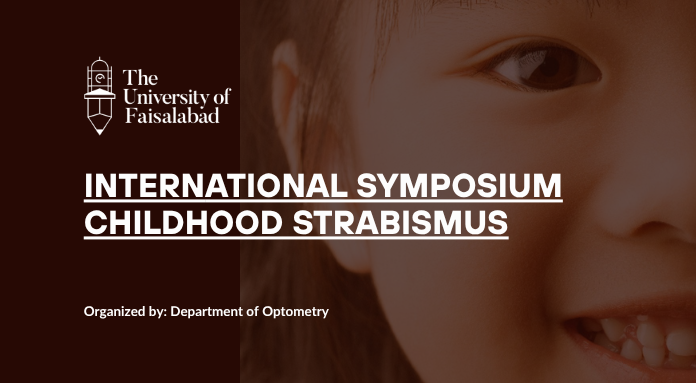
The Department of Optometry, organized the International Symposium on Childhood Strabismus with welcome remarks by Dr Memoona Arshad, Associate Professor, Department of Optometry. She emphasized the importance of early detection, timely intervention and collaborative clinical approaches in the management of childhood strabismus.
This international academic gathering brought together distinguished national and international experts who shared valuable insights, research findings, and clinical perspectives on childhood strabismus. The discussions highlighted the critical role of early diagnosis and its long-term visual and developmental implications. The event was honored by the presence of Prof Dr Aamir Ali Choudhary, Head, Department of Ophthalmolog, MTH who attended as the Chief Guest, adding prestige to the occasion and encouraging academic excellence and professional growth.
The panel of distinguished speakers included Dr Alvin Munsamy, PhD, Professor in the Discipline of Optometry at the College of Health Sciences, University of KwaZulu-Natal, South Africa; Dr Angel Perez, PhD, who joined virtually as an international speaker, serving as Project Director at the University of Florida and Director of Early Education Programs at Good-Lite Company, USA; and Dr Mutahir Shah, PhD, Consultant Optometrist affiliated with Inayat Eye Hospital and KRL Hospital, Islamabad, Pakistan. Furthermore, faculty members from the Department of Optometry across both campuses participated actively, demonstrating strong institutional involvement and support. The sessions were highly informative and interactive, fostering meaningful discussions on current challenges, advancements, and evidence-based practices in strabismus care. Students, clinicians and academicians actively engaged in knowledge exchange, making the symposium a vibrant platform for learning and professional collaboration.
This symposium also aligned with key Sustainable Development Goals (SDGs), particularly SDG 3: Good Health and Well-being by promoting pediatric eye health and early intervention; SDG 4: Quality Education through academic learning and knowledge dissemination; SDG 10: Reduced Inequalities by addressing visual health disparities; and SDG 17: Partnerships for the Goals by fostering international collaboration and knowledge exchange. Following the symposium, a class project was presented to the national keynote speaker. The presentation was well received and he appreciated the efforts, creativity and academic dedication demonstrated by the students.
Overall, the symposium served as a valuable academic forum that strengthened clinical understanding and reinforced the commitment to advancing vision science and pediatric eye care at both national and global levels. The event concluded on a positive note, leaving participants inspired and better equipped to contribute to the field of optometry.