Quality Education
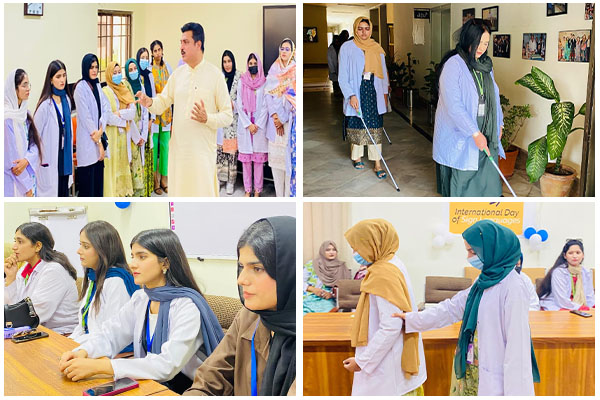
In a significant move toward bridging the gap between clinical theory and community rehabilitation, the Department of Optometry organized an immersive educational visit to the National Mobility & Independence Training Centre (NMITC) and the National Institute of Special Education (NISE) on October 17, 2025.
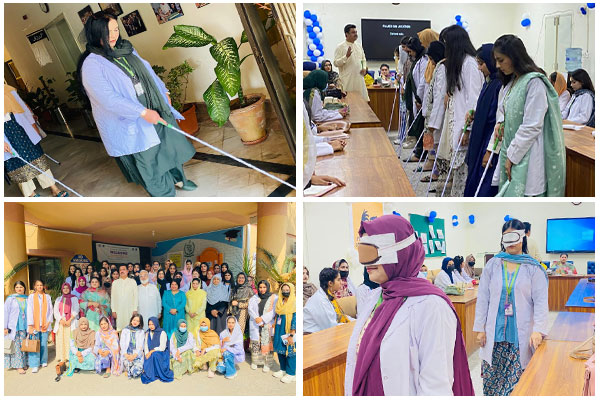
Timed to align with the global observance of White Cane Safety Day, this initiative provided final-year students with specialized exposure to the socio-rehabilitative aspects of vision care.
Bridging the Clinical-Rehabilitative Gap
The delegation was hosted by Mr Taimoor Imran Ali Khan (Officer In-Charge, NMITC) and Ms Noreen Altaf (Officer In-Charge, NISE), who emphasized the critical role of the White Cane as a "symbol of freedom and a tool of dignity."
Moving beyond the classroom, students engaged in a masterclass on Orientation and Mobility (O&M). The training session, led by the NMITC expert team, included:
"Witnessing the transition of the white cane from a clinical tool to a bridge for social inclusion has redefined our perspective as future Optometrists," remarked a participating student.
A Commitment to Global Impact (SDGs)
By integrating experiential learning with social advocacy, TUF continues to align its curriculum with the United Nations Sustainable Development Goals (SDGs), reinforcing its position as a socially responsible academic leader:
SDG 4: Quality Education; Enhancing clinical curriculum through high-level experiential learning and specialized field training.
SDG 8: Decent Work; Equipping future healthcare leaders with the skills to facilitate workplace inclusion for the disabled.
SDG 10: Reduced Inequalities; Advocating for the rights and mobility of the visually impaired community to ensure no one is left behind.
SDG 11: Sustainable Cities And Communities; Training professionals to design and advocate for accessible, inclusive urban infrastructure.